Green Juice Benefits: What's Actually in a Glass
Quick answer: Green juice is juice pressed mainly from green vegetables such as cucumber, celery, kale and spinach, often with lemon, ginger or a little apple or pear. Its real benefits are practical: it is an easy way to get more vegetables into your day, it is mostly water, and a veg-led green juice carries far less sugar than a typical fruit juice. Juicing removes most of the fibre, so green juice adds to whole vegetables rather than replacing them.
Green juice benefits attract some big promises. This guide sticks to what is actually in a glass: the vegetables, their nutrients, what green juice is genuinely good for, where it falls short and how to choose one.
What is green juice?
Green juice is juice pressed mostly from green vegetables and leafy greens. A juicer separates the liquid from the pulp, so you get the water, vitamins and minerals from the vegetables without most of the fibre. Many add lemon or ginger for flavour, and some add apple or pear to soften the greens.
What's in a typical green juice?
Here is what the most common ingredients bring to the glass:
- Cucumber and celery. The base of most green juices. Both are mostly water, which gives the juice its volume and fresh taste. Celery also contains potassium, and potassium contributes to normal muscle function.
- Kale. A leafy green that is naturally rich in vitamin K and also contains vitamin C. Vitamin K contributes to the maintenance of normal bones.
- Spinach. Contains folate and vitamin K. Folate contributes to the reduction of tiredness and fatigue.
- Romaine lettuce. Mild and juicy, it adds volume along with some vitamin K and folate.
- Parsley. A small handful adds a sharp, fresh flavour and contains vitamin C and vitamin K.
- Lemon. Brightens the taste and contains vitamin C.
- Ginger. Used for warmth and bite rather than for its nutrients.
- Apple or pear. Adds sweetness and takes the edge off bitter greens, but also adds natural sugar.
Amounts per bottle depend on the recipe, so read this as what the ingredients contain.
The benefits people genuinely get from green juice
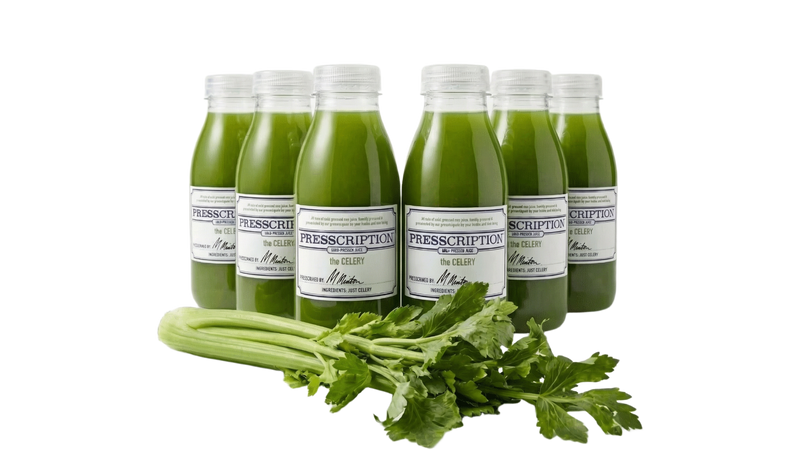
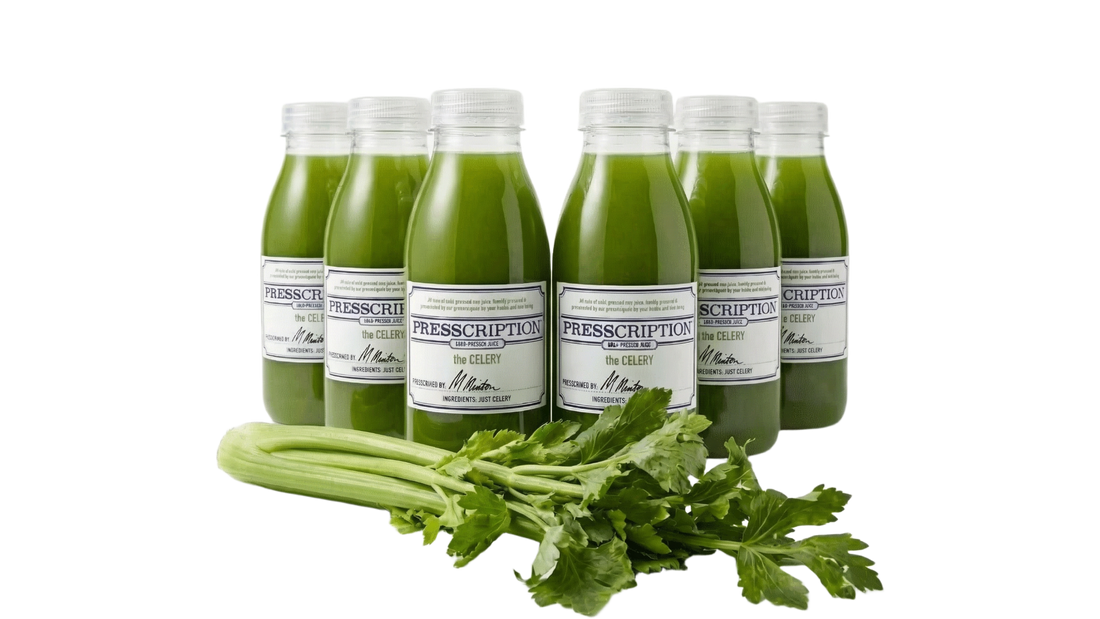
- An easy way to add more vegetables. A 500ml green juice is pressed from a lot of produce; our celery juice takes roughly a whole head of celery per 500ml bottle. If you find it hard to eat many vegetables on a busy day, a green juice is a simple way to add more plants.
- Hydration. Cucumber and celery are mostly water, so a green juice counts towards what you drink in a day.
- A lower-sugar choice than fruit juice, when it is veg-led. A juice made mostly from cucumber, celery and leafy greens contains much less sugar than orange or apple juice. Our Green Vital is 100% vegetables, with no fruit at all.
The honest limits of green juice
- Juicing removes most of the fibre. The fibre stays behind in the pulp, so green juice is not a replacement for eating whole vegetables. More in blending vs juicing.
- Green does not always mean low sugar. Some green juices are mostly apple, pineapple or mango with a handful of spinach for colour. Check the ingredients. Our guide Is juice bad for you? goes into sugar in more detail.
- It is not a meal. Green juice has very little protein or fat, so it will not keep you full for long on its own.
- Some people should check with their GP first. Leafy greens are high in vitamin K, which can affect how blood-thinning medicines such as warfarin work, so if you take one, speak to your GP before drinking green juice regularly. The same goes if you have kidney problems and have been told to watch your potassium. If you are pregnant or have a weakened immune system, ask your GP or midwife whether unpasteurised juice is right for you.
Cold-pressed vs pasteurised, HPP and frozen green juice
Most juice made to sit on a shelf for weeks is treated to extend its life. Pasteurised juice is heated. HPP (high pressure processing) holds sealed bottles under very high pressure. Some juice is frozen and thawed before sale. Heat can reduce some heat-sensitive vitamins, such as vitamin C.
Cold-pressed green juice is made by crushing and pressing the vegetables to squeeze out the juice, rather than shredding them with a fast-spinning blade. Ours is pressed to order every day in London and is never pasteurised, HPP'd or frozen. The trade-off is a short life: it keeps for about 3 days in the fridge. More on why we do it this way in Cold Pressed is Best.
How to choose a good green juice
- Look at the veg-to-fruit ratio. Mostly vegetables, with fruit as a supporting act. Across our cleanses, the ratio is about 80% veg to fruit.
- Read the ingredient order. Ingredients are listed from most to least, so if apple comes first, you are mostly drinking apple juice.
- Check the bottle. We use glass rather than plastic; here is why we chose glass.
- Check how fresh it is. Fresh, unpasteurised juice needs the fridge and has a use-by of days, not weeks.
- Nothing added. No added sugar, concentrates or water bulking it out.
Our green juices
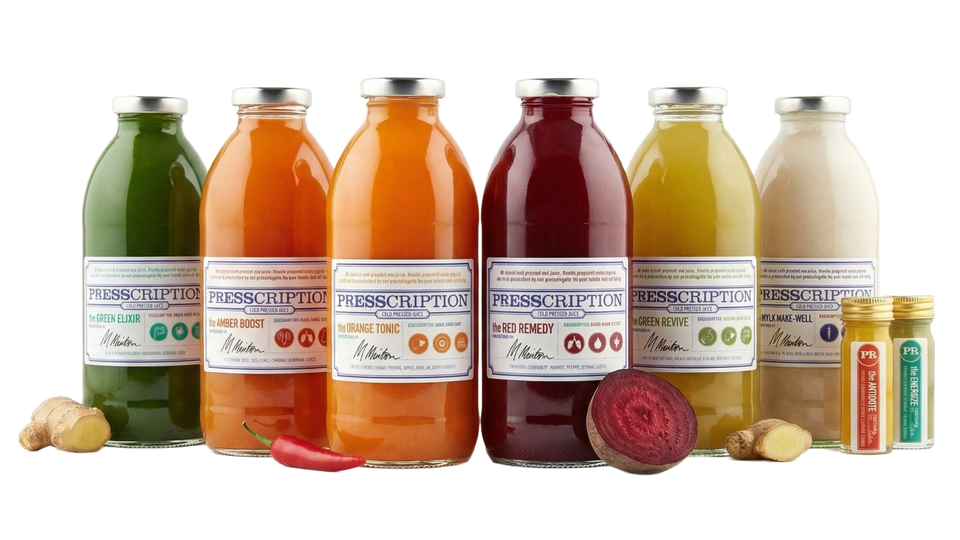
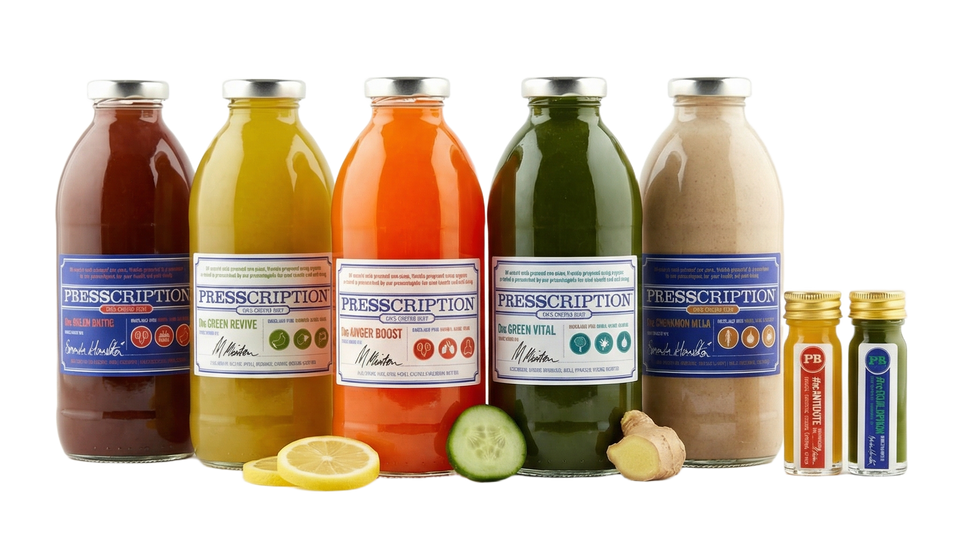
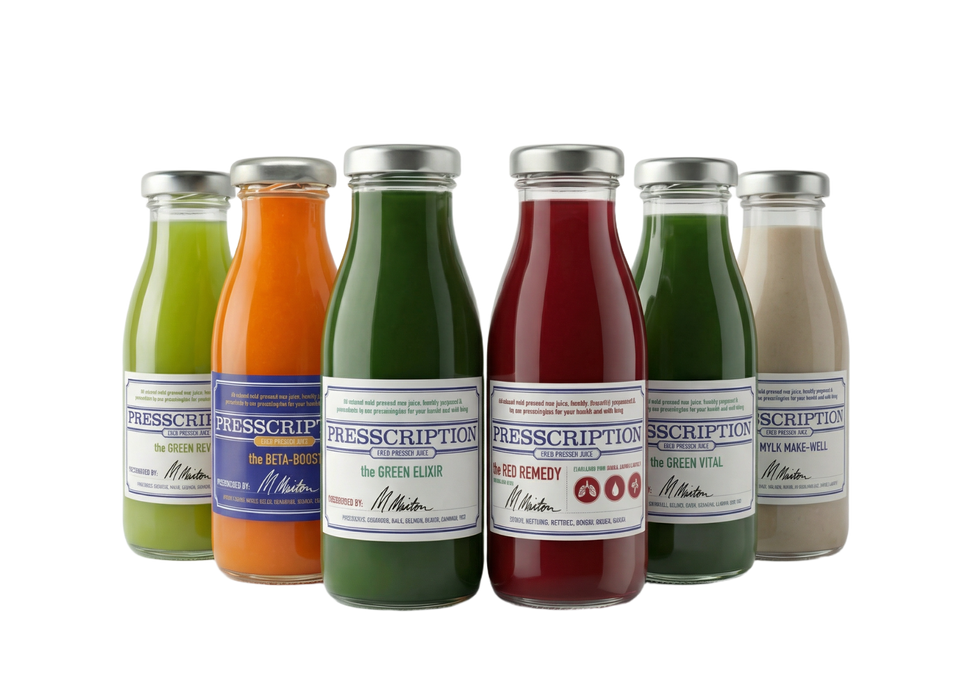
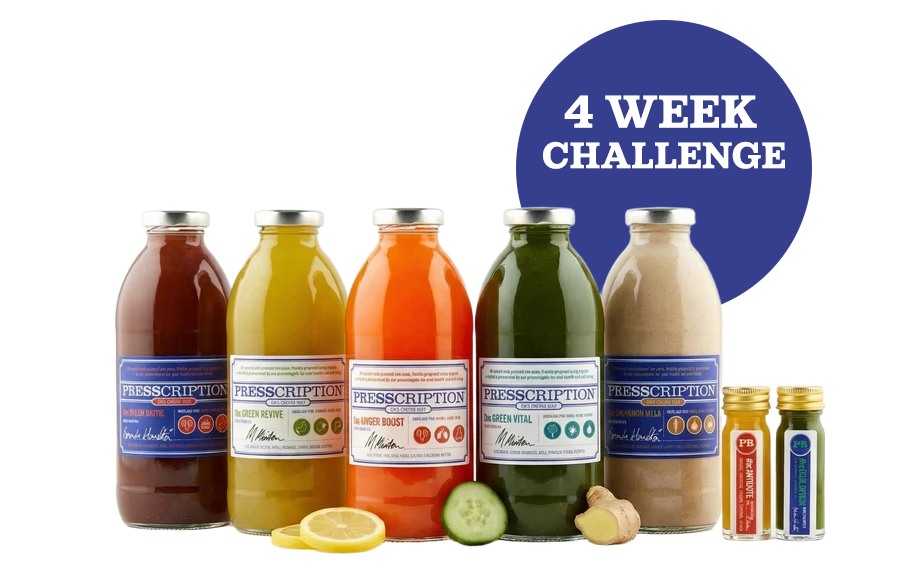
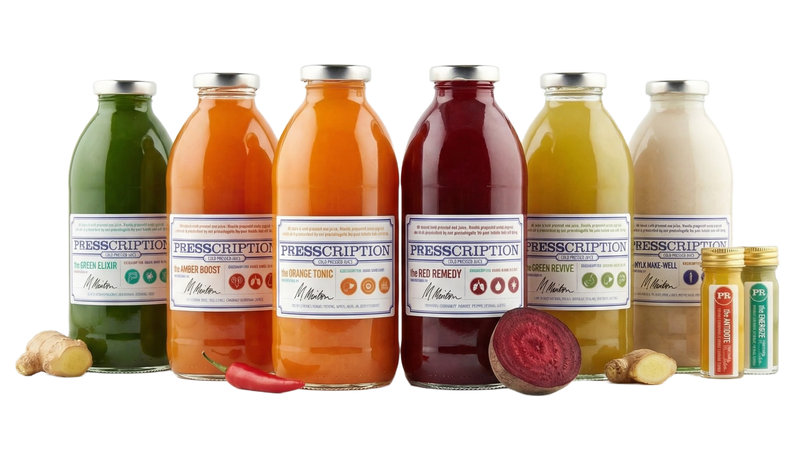
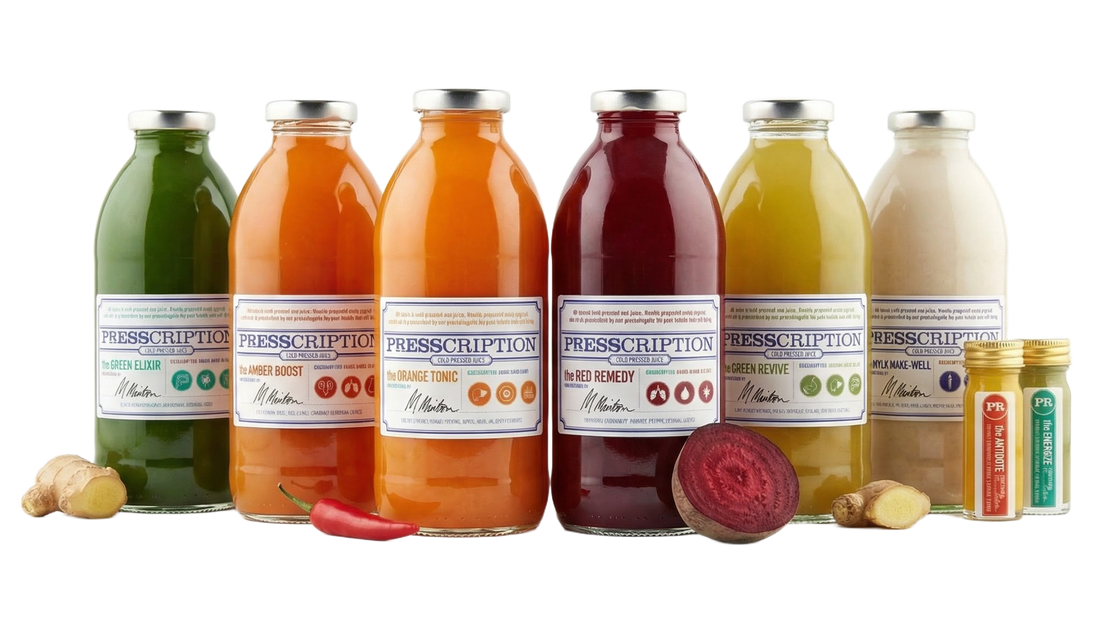
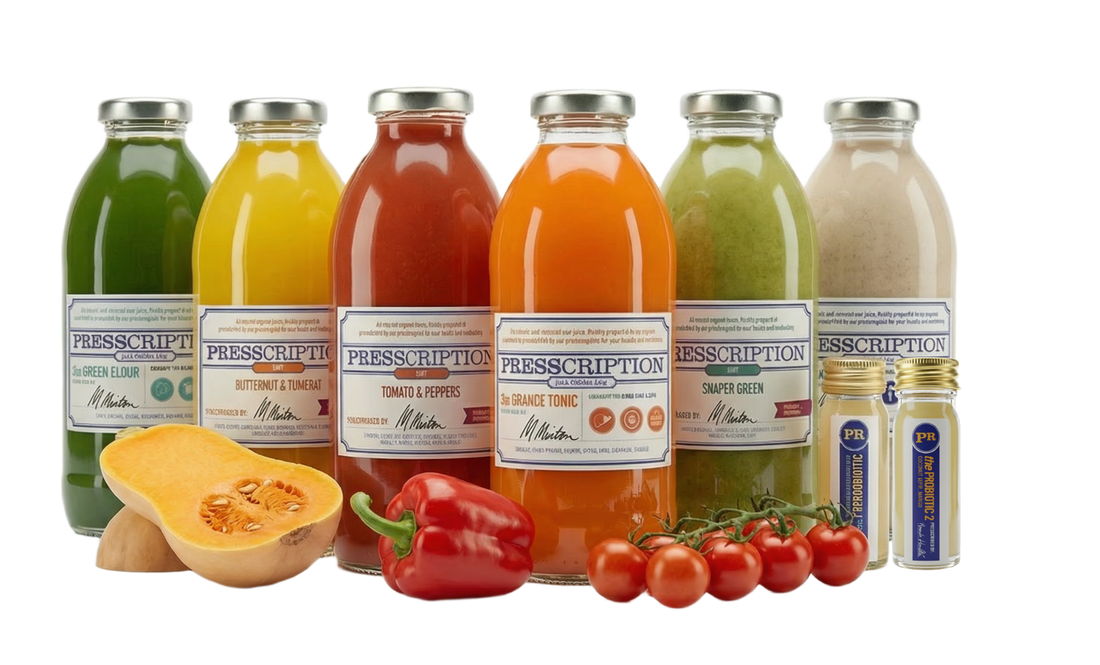
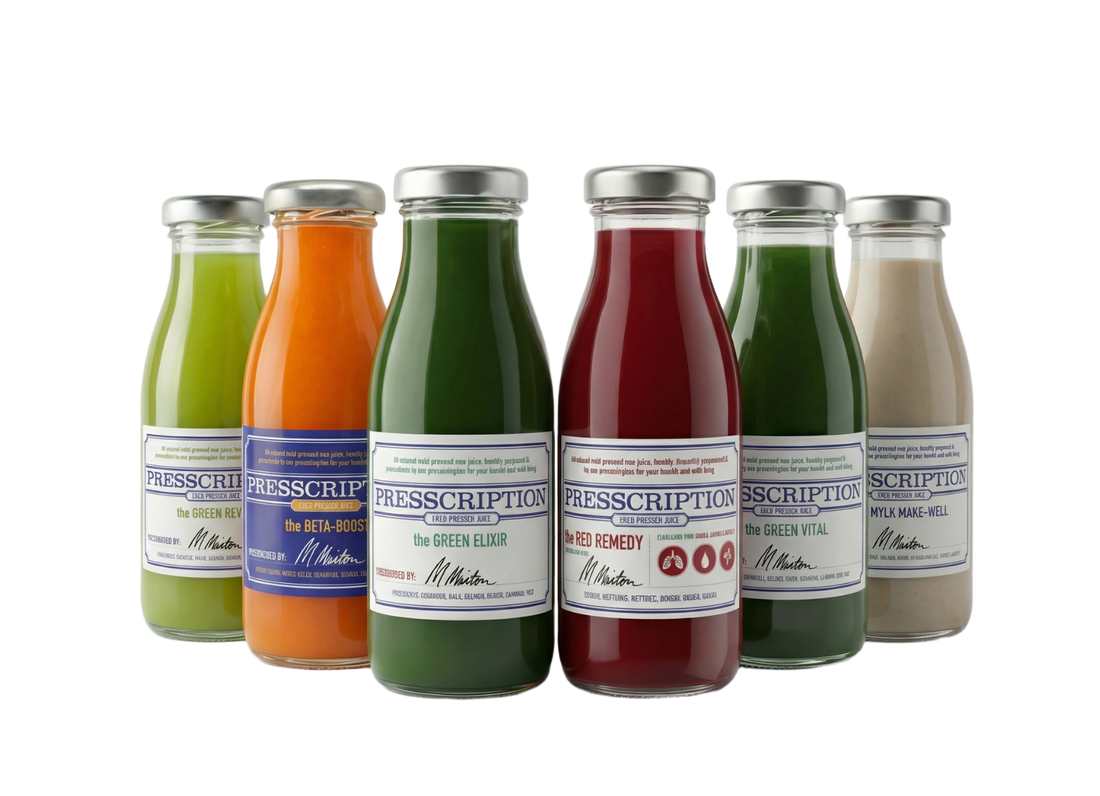
Our cold-pressed green juices are designed by our nutritionist and range from all-veg to lightly sweetened:
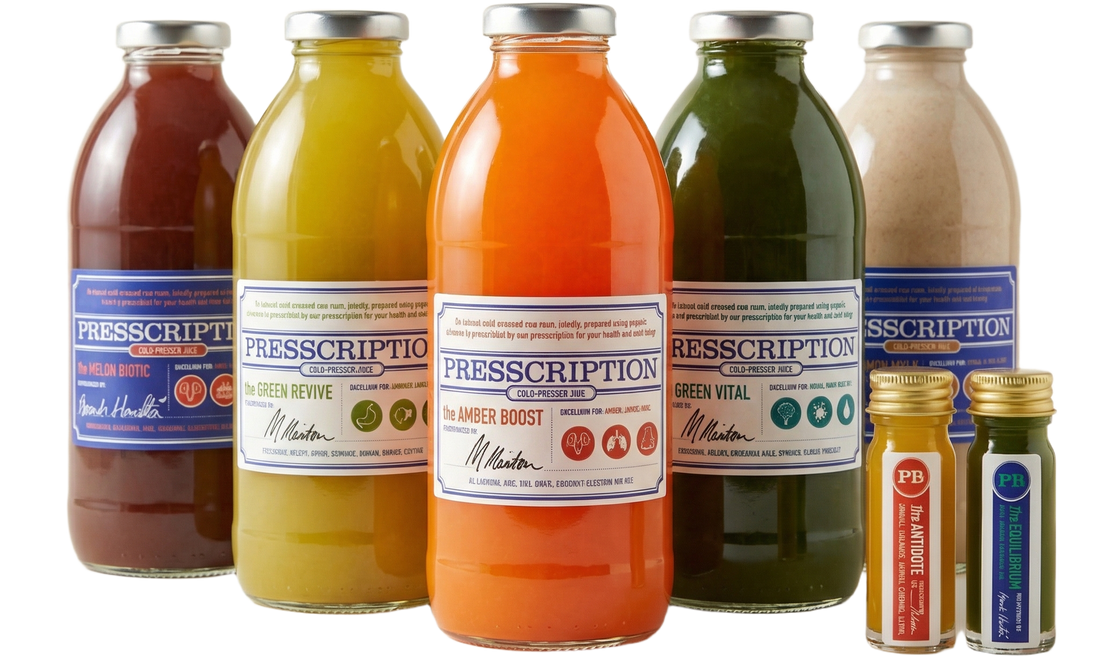
- The Green Vital: cucumber, celery, broccoli, kale, spinach, lemon and parsley. 100% veg and our greenest juice.
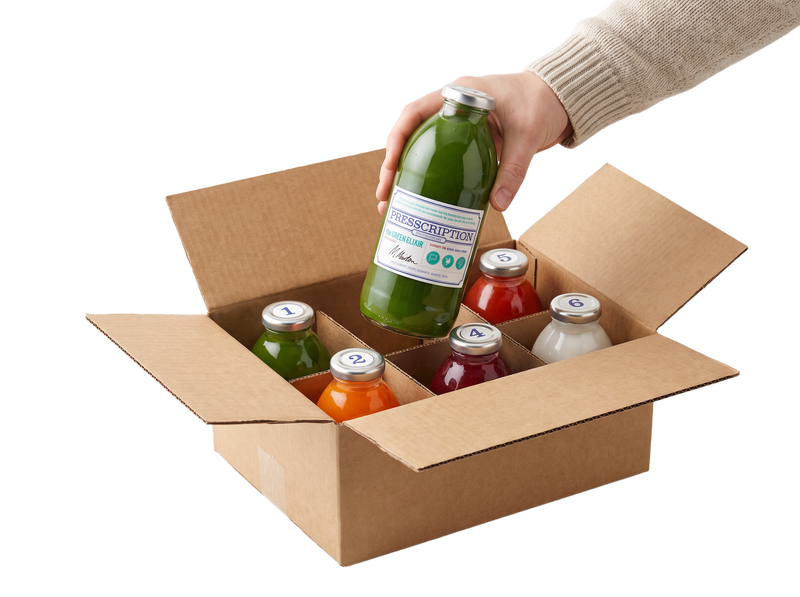
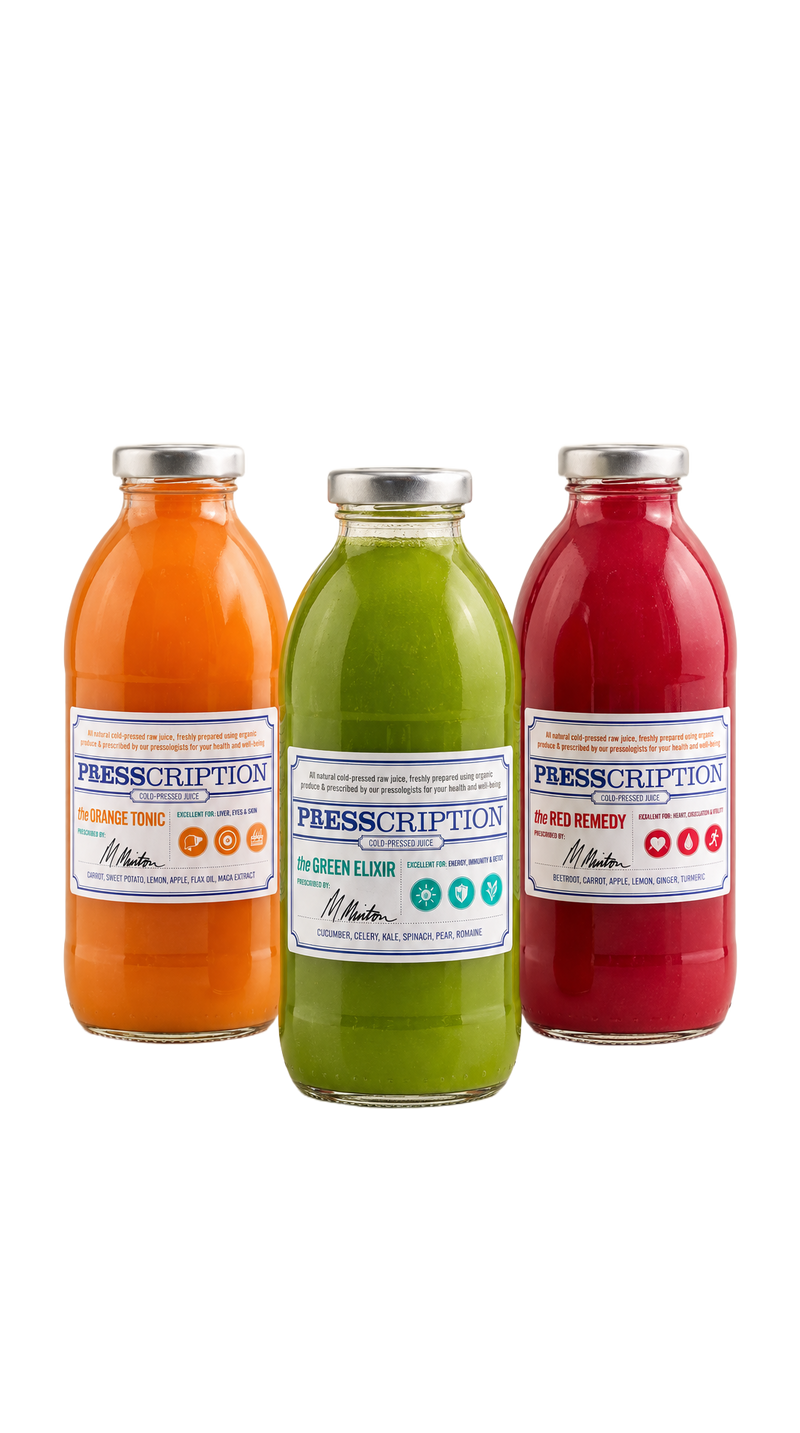
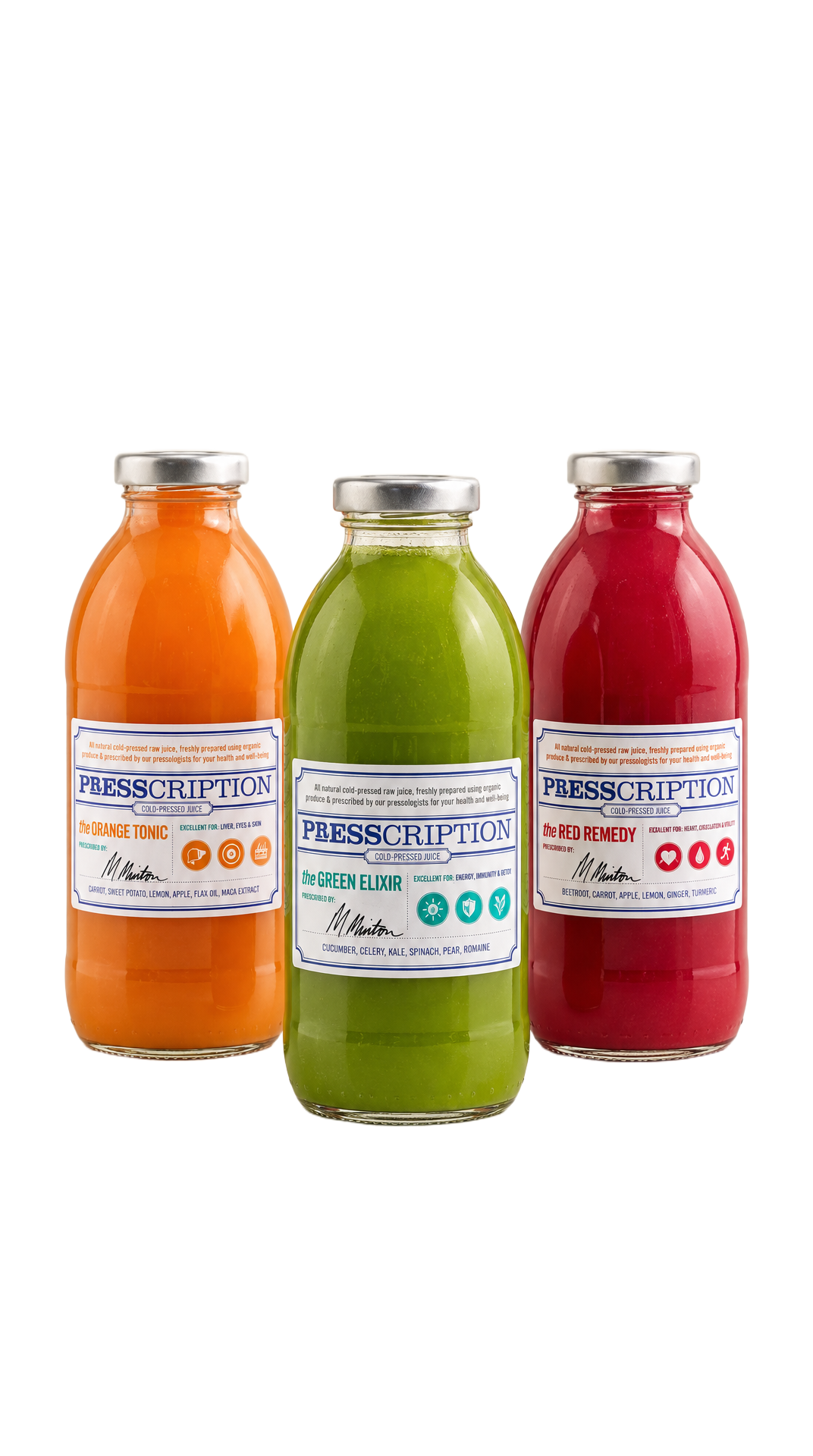
- The Green Elixir: kale, spinach, celery, cucumber, romaine and pear, for a gentler, slightly sweet green.
- The Green Revive: cucumber, celery, romaine, apple, lemon, ginger and a pinch of cayenne.
- The Aloe Glow: cucumber, kale, spinach, celery, romaine, pear and aloe vera.
- The Celery Juice: 100% organic celery, nothing added.
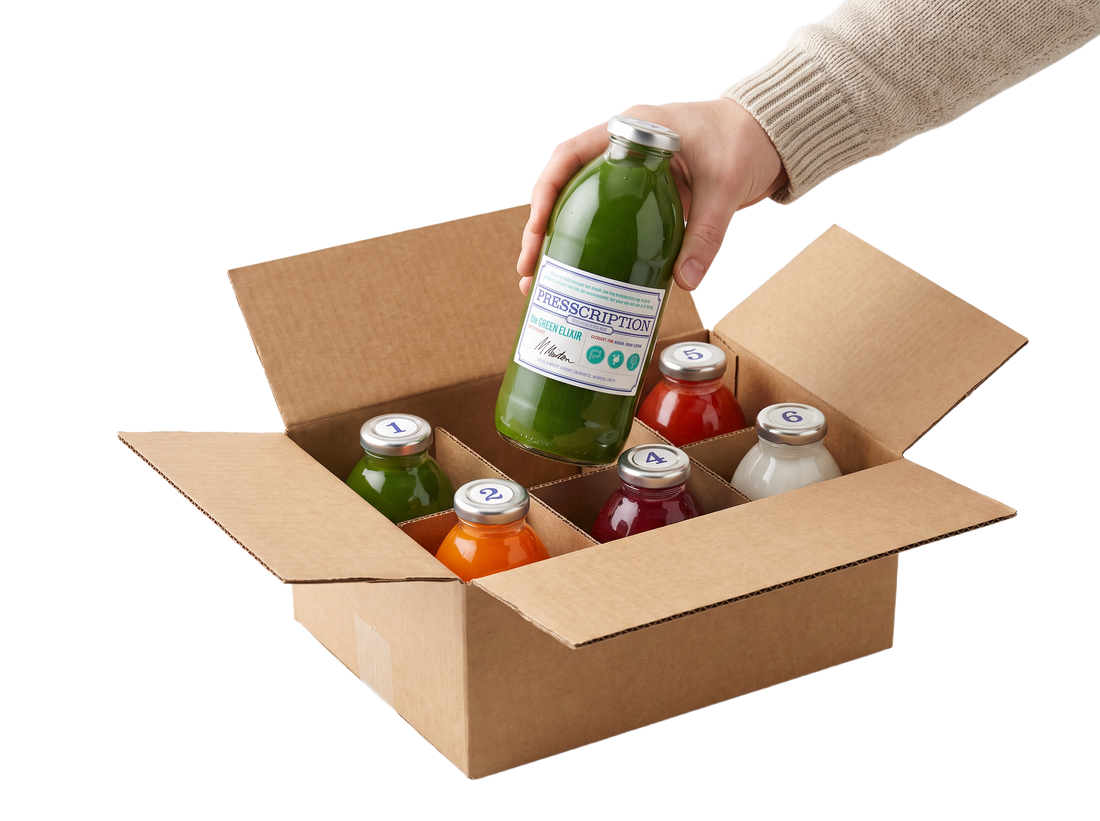
You will also find The Digestive Aid, made with dandelion root and rocket, in the collection. To try several at once, the Green Bundle is six 500ml green juices, including The Green Vital twice, with 10% off compared with buying them separately.
For green juice delivery, London orders arrive the evening before your chosen date (Sunday to Thursday, 7 to 10pm), and the rest of the UK receives orders by 10:30am on the day (Tuesday to Friday). Delivery is free on UK orders of £100 or more, otherwise £7.99.
How to drink green juice
- Keep it in the fridge, shake the bottle (fresh juice settles) and drink it chilled.
- Many people have theirs in the morning, on its own or alongside breakfast.
- Drink it within about 3 days of delivery.
- Drinking celery juice? Most people have it first thing on an empty stomach. Read our celery juice dos and don'ts.
Green juice FAQs
What is green juice?
Juice pressed mainly from green vegetables such as cucumber, celery, kale, spinach and romaine, often with lemon, ginger, parsley or a little apple or pear.
Is green juice good for you?
A veg-led green juice is an easy way to add more vegetables and fluids to your day, with much less sugar than most fruit juices. Juicing removes most of the fibre, so it adds to whole vegetables rather than replacing them. If you take blood thinners or have a medical condition, check with your GP first.
Is cold-pressed green juice better?
Cold-pressed juice is pressed rather than blade-shredded and, when it is unpasteurised, is not heat-treated, which can reduce some heat-sensitive vitamins such as vitamin C. The trade-off is a short fridge life of a few days.
Do you deliver green juice?
Yes. London orders arrive the evening before your chosen date (Sunday to Thursday, 7 to 10pm); the rest of the UK receives orders by 10:30am (Tuesday to Friday). Delivery is free on orders of £100 or more, otherwise £7.99.